
It’s often said that we shall not play with food... but shouldn’t we?
The eating experience is a sum of multi-sensory impulses, where taste is not the only sense involved. The ideal of such holistic experience has been approached from various disciplines. The scientific community has been investigating gastronomy’s experiential value for a long time. Gastronomy is also a field of interest for many creative practitioners. In a similar manner, contemporary haute cuisine chefs are also experimenting with the idea of cuisine as a multidisciplinary artistic form.
One way or another, these proposals tend to present the diners with a rather contemplative experience in which their only role is to eat and contemplate. While this is not necessarily wrong, we suggest that for us to build a truly holistic dining experience diners should be put at the very center of the experience. Through my research, I propose that by using game thinking during the food design process we would be able to generate what game designers call a magic circle. By binding together all the multi sensory contents of the dining experience through gameful mechanics, we might achieve a greater level of immersion that might result in a better perception of the whole experience, including the taste itself. Gastronomy could be considered one of the most complex artistic expressions. Could game thinking help us enhance and enrich its experiential value?
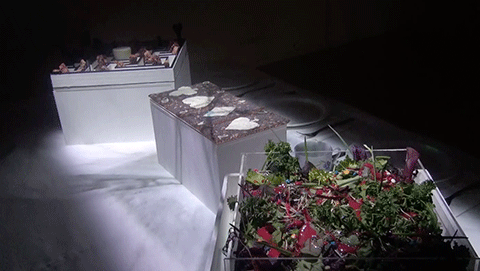
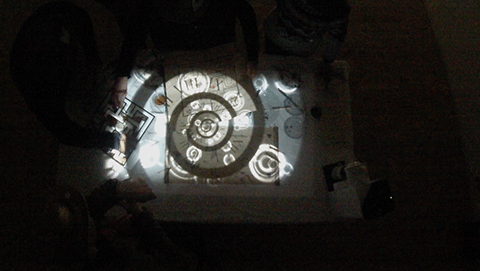
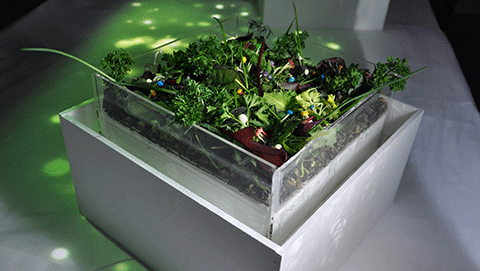
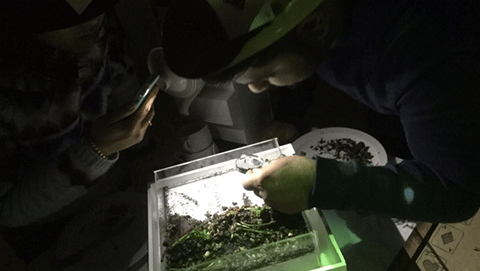
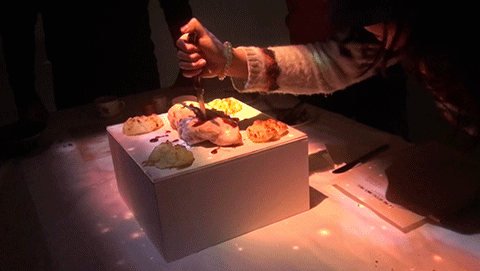
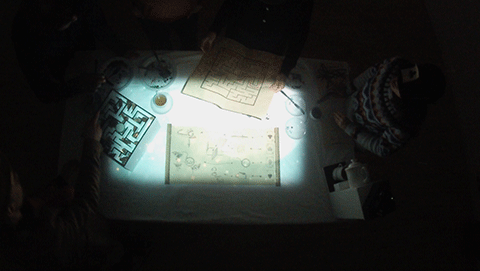
Building on top of this hypothesis, me and four colleagues conducted an experiment of a playful dining themed after L. Carroll’s 'Alice in Wonderland'. During two weeks and a half, me, Mirzel, Asbjørn, Lennart and Thomas conceptualized, designed, built, and executed a whole dining experience. In 'The Mad Hatter's Dinner Party', diners were immersed into the magic of Wonderland.
A paper describing the experiment and the findings was presented at SIDeR '16 conference in Malmö (Sweden) and was recognized with the best paper award in the event. A poster version of the paper was also presented at the NordiCHI '16 conference in Göteborg (Sweeden) in October 2016.